Toy Validation
Results
The current results are strongest on the toy harness. They show mechanism, stability, and failure-repair evidence for replicator_nashmtl, not benchmark-level superiority on QM9 or NYUv2.
High-signal summary
init=1 was real, and the repaired design avoids that one-hot behavior while remaining adaptive.Figure set
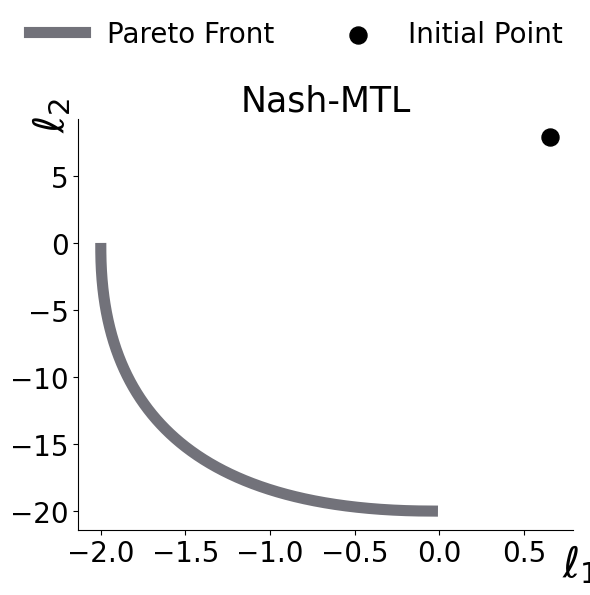
Figure 1. Plain Nash-MTL baseline
This is the stable reference behavior with no outer replicator scheduler.
Why it matters: every other toy figure is interpreted relative to this control.
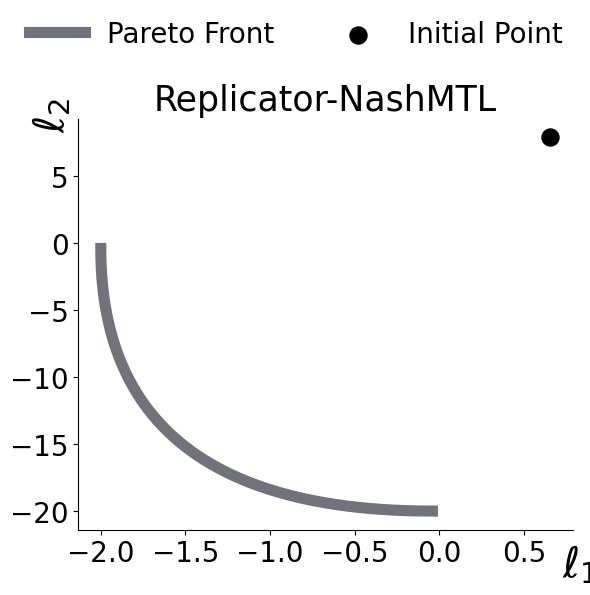
Figure 2. Replicator-augmented trajectory
This tuned version changes optimization behavior relative to the plain Nash baseline.
Why it matters: it shows the method is not merely running; the outer scheduler is affecting the path.
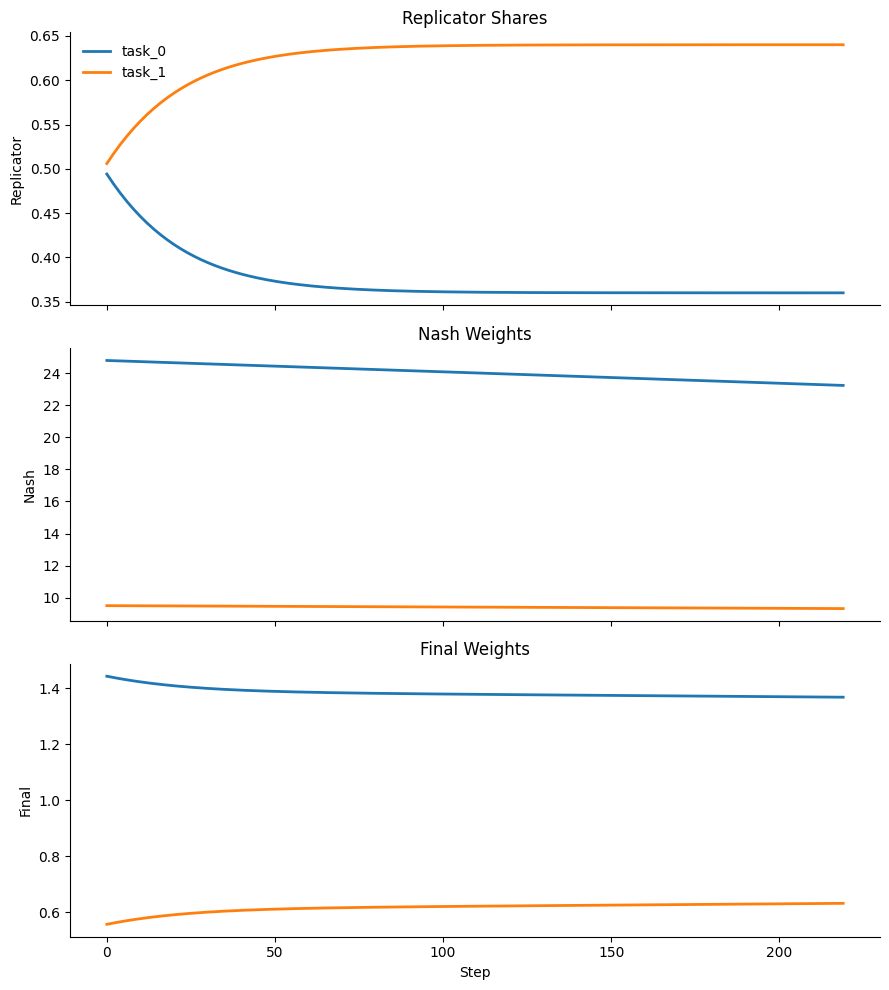
Figure 3. Weight evolution and mechanism validation
This is the clearest mechanism figure. It separates replicator_shares, nash_weights, and final_weights.
Why it matters: it is the cleanest proof that the outer scheduler is active, stable, and producing a real rebalancing effect.
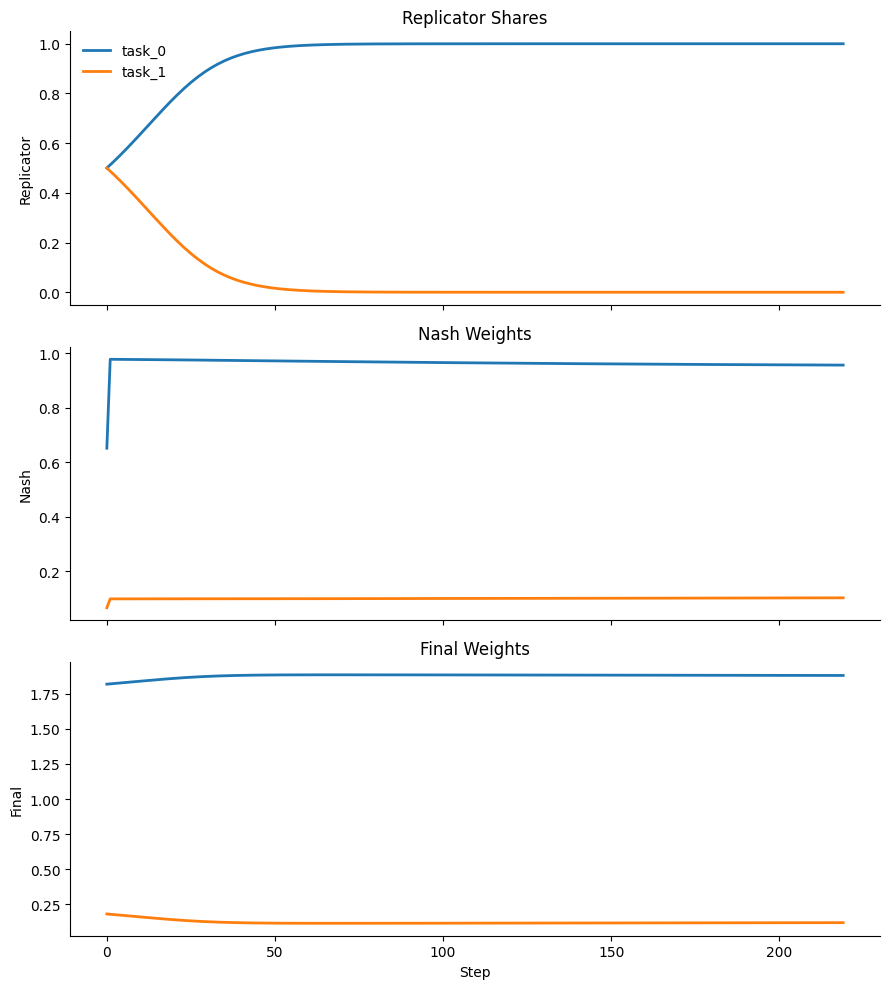
Figure 4. Old collapse mode
This captures the previous failure mode on the hard init=1 case, where the scheduler became too aggressive and drifted toward one-hot behavior.
Why it matters: it gives a concrete before-state rather than only claiming that earlier settings were unstable.
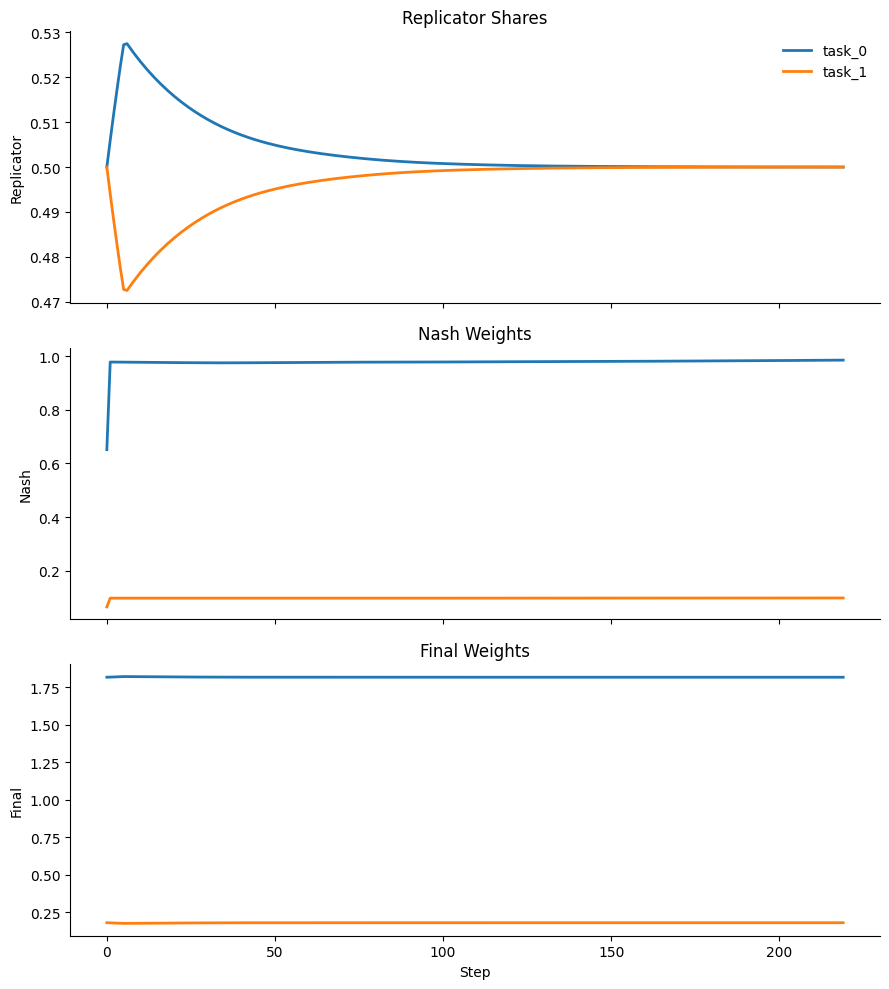
Figure 5. Repaired stable behavior
This shows the stabilized design on the same hard case after the signal and hyperparameter fixes.
Why it matters: the collapse is not just hidden; the repaired scheduler remains normalized and adaptive without breaking into a selector.
Notes distilled from the image folder
The strongest takeaways from final_notes.txt, meaning.txt, and PaperBullets.txt are:
- The core design goal is to augment Nash-MTL, not replace it. Nash remains the inner fairness mechanism, while the replicator layer provides slower long-run adaptation.
- The original toy setup was not enough because the outer scheduler was effectively inactive. The improved harness explicitly feeds scheduler signals and saves the right histories.
- The preferred scheduler signal is
qm9_proxy, which blends relative loss, under-improvement, and underperformance into a smoother outer-control signal. - The most informative figure is the weight-evolution plot because it exposes the exact relationship between scheduler state, bargaining weights, and final optimization weights.
- The repaired method is credible today as a stability and mechanism improvement. A clean benchmark-level win on real data remains an open question.
Current limitations
- These results are still toy-centered.
- QM9 smoke runs launched, but they did not yet yield a finished comparison strong enough to headline.
- Under the final representative setup, some signal ablations looked similar, so the most persuasive story right now is scheduler responsiveness and stability rather than fine-grained signal separation.